Digital infrastructure
Why Natural Gas Is the Bridge Power for AI Data Centers
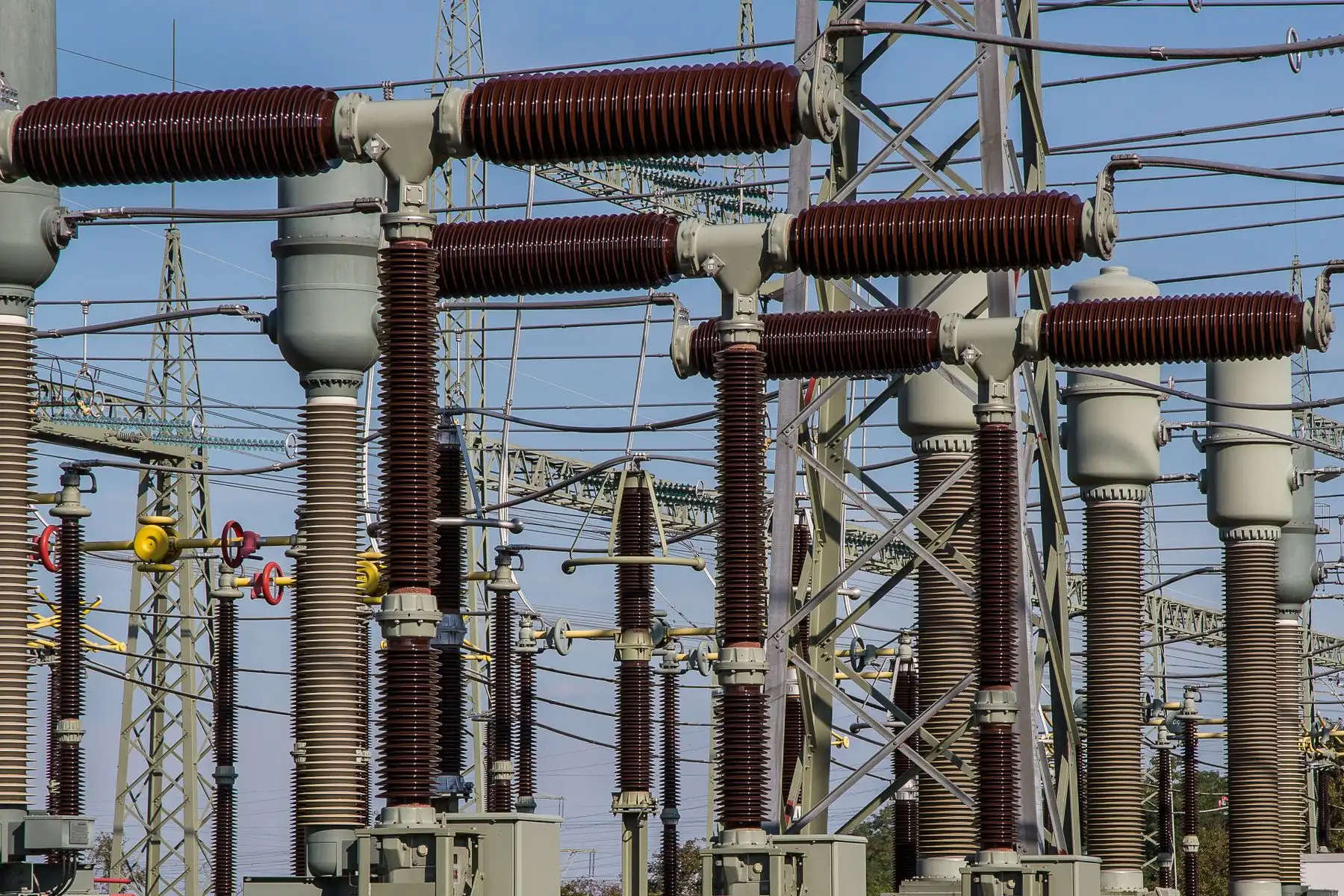
I am co-founder and principal of Turks Capital Partners. We are developing data centers on two tracks, and they do not want the same building.
The first is ground-up hyperscale, from 100 megawatts to a gigawatt and more. On-site natural gas is the primary power. The lease we underwrite is single-tenant and triple-net, to a credit tenant that needs medium-to-high rack density. The use is training large models, and running inference. The second track is the acquisition and upgrade of facilities that already sit in major U.S. markets, with fiber or wireless connectivity at about five milliseconds of latency or less. That track is for mission-critical systems and for inference that cannot wait on a long haul.
This essay is about the power choice on the first track.
Natural gas is the practical primary power for that building in the near term. I am not arguing that it is the last fuel the industry will use. I am arguing that it is the one that can be built, contracted, and run while small modular reactors and the next generation of batteries are still maturing. It is a bridge. You use a bridge because the other bank is not open yet.
Reliability comes first. The designs we are underwriting target 99.999 percent uptime. Gas is not a weather resource. It does not go quiet because the sky is wrong. A training run is a spike, not a flat line, and gas can be brought up for that spike on a timetable a new transmission line will not match. On the site, the same plant is a microgrid: a backstop if the utility grid fails. The Department of Energy has put the cost of blackouts to the U.S. economy at $150 billion a year. I do not need a louder number than the one the Department has already published. The cost of a dark hall is already in the decision.
Land is the second reason. Gas is energy-dense, so the power plant takes less of the parcel. In markets where the land is already tight — Northern Virginia, Silicon Valley, Dallas — that footprint is whether the site can hold both the halls and the generation. I am naming those cities as examples of constrained land. I am not naming Turks Capital campuses. We have not published a site, a megawatt figure for a Turks Capital project, or a customer. The ranges in this essay are the thesis. They are not a measured asset.
Cost is the third reason, and it only counts with the source attached. Lazard’s 2023 levelized-cost analysis puts the build cost of natural gas around $700 to $1,000 per kilowatt, against $1,200 to $1,500 per kilowatt for solar plus storage. A long-term fixed-price gas contract is how that cost stays predictable after the plant is in the ground. I am not treating Lazard as a forecast of our own returns. I am treating it as the comparison that makes gas the near-term choice, rather than a slogan.
Demand is why the timetable is short. The International Energy Agency estimates that power growth from large AI models is running 20 to 30 percent a year. Training wants the large, steady, on-site block. Inference that cares about latency is often better on the second track, close to the user, in a building we upgrade rather than invent. I do not mix those two problems into one campus and call it a strategy.
The people who can draw this are already on the team, including former engineers from Oracle and AWS. That sentence is about prior employment. It is not a partnership, and it is not an endorsement by either company. I am not naming anyone. Members of our data center team have designed a facility that uses natural gas as primary, backup, or temporary power: 2N+1 redundancy, a power island that can run without the grid, closed-loop cooling that does not evaporate water, about 18 megawatts in total and 7.5 megawatts of critical IT, drawn so hydrogen can be blended in over time. That is their design experience from earlier roles. It is not a Turks Capital completion, and it is not an asset we are listing.
What I will not do here is attach a Turks Capital address or a Turks Capital megawatt number. Those stay off the site until they are real enough to stand on. For the hyperscale track, the power that can be stood on now is natural gas, until the bridge reaches the other bank.
Perspective by Adam Craig Hochfelder, co-founder and principal of Turks Capital Partners. This is not investment advice, and it does not announce a transaction.